
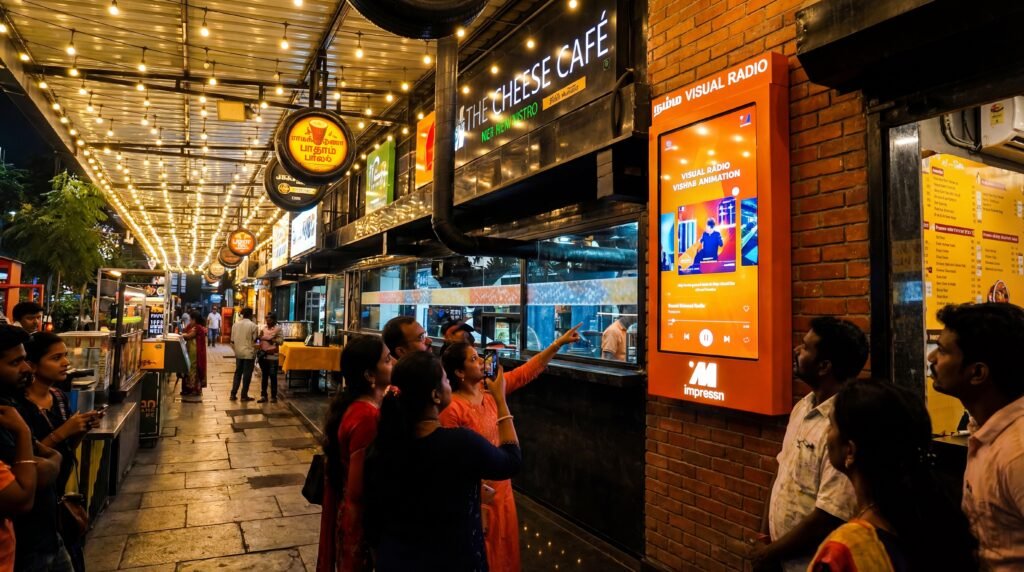
Today’s audiences are more selective about what they pay attention to. Traditional ads that interrupt or repeat endlessly are often ignored. This has led to the rise of infotainment—a content-led approach that combines information, entertainment, and brand messaging.
Infotainment works because it respects the viewer’s time. Instead of demanding attention, it earns it. Short, engaging content such as visual stories, local updates, or light entertainment creates a comfortable viewing experience. When brand messages appear within this flow, they feel natural rather than disruptive.
In public environments, infotainment becomes even more powerful. Screens placed in everyday locations—like tea shops, food streets, gyms, or cafés—reach audiences during relaxed moments. These are times when people are more open to watching and absorbing content, leading to stronger recall and brand acceptance.
For brands, infotainment offers consistency and frequency. Audiences often visit the same locations daily, which means repeated exposure without fatigue. Over time, this builds familiarity and trust, especially for categories like FMCG, fintech, lifestyle, and local businesses.
As advertising continues to evolve, infotainment-led formats are setting a new standard. They show that when content is engaging and context-aware, advertising doesn’t have to interrupt—it can simply belong.